In the print trade, an after is a reproduction made in the manner of a master, under license, its authorship a matter of agreed fiction. The word does polite work: it lets a copy hang in a gallery without lying about what it is.
This catalogue borrows that device and points it at a different inheritance: four bodies of work, each built in the vocabulary of an artist who already knew that the apparatus is the argument: the dot that withholds a face, the word stacked on its own synonyms, the stencil that drowns in its own repetition, the material that performs the word it spells. What's dropped in is not gallery language but market language: the disclaimers, mantras, and coping devices of people who confused conviction for information.
Crypto slang turns out to want the same thing propaganda print, protest banners, and stock photography always wanted: repetition standing in for proof. Framed and captioned like this, it finally gets the treatment it's been asking for.
The work may be synthesized by machine.
The work need not be built.
The decision as to condition rests with the receiver upon the occasion of receivership.
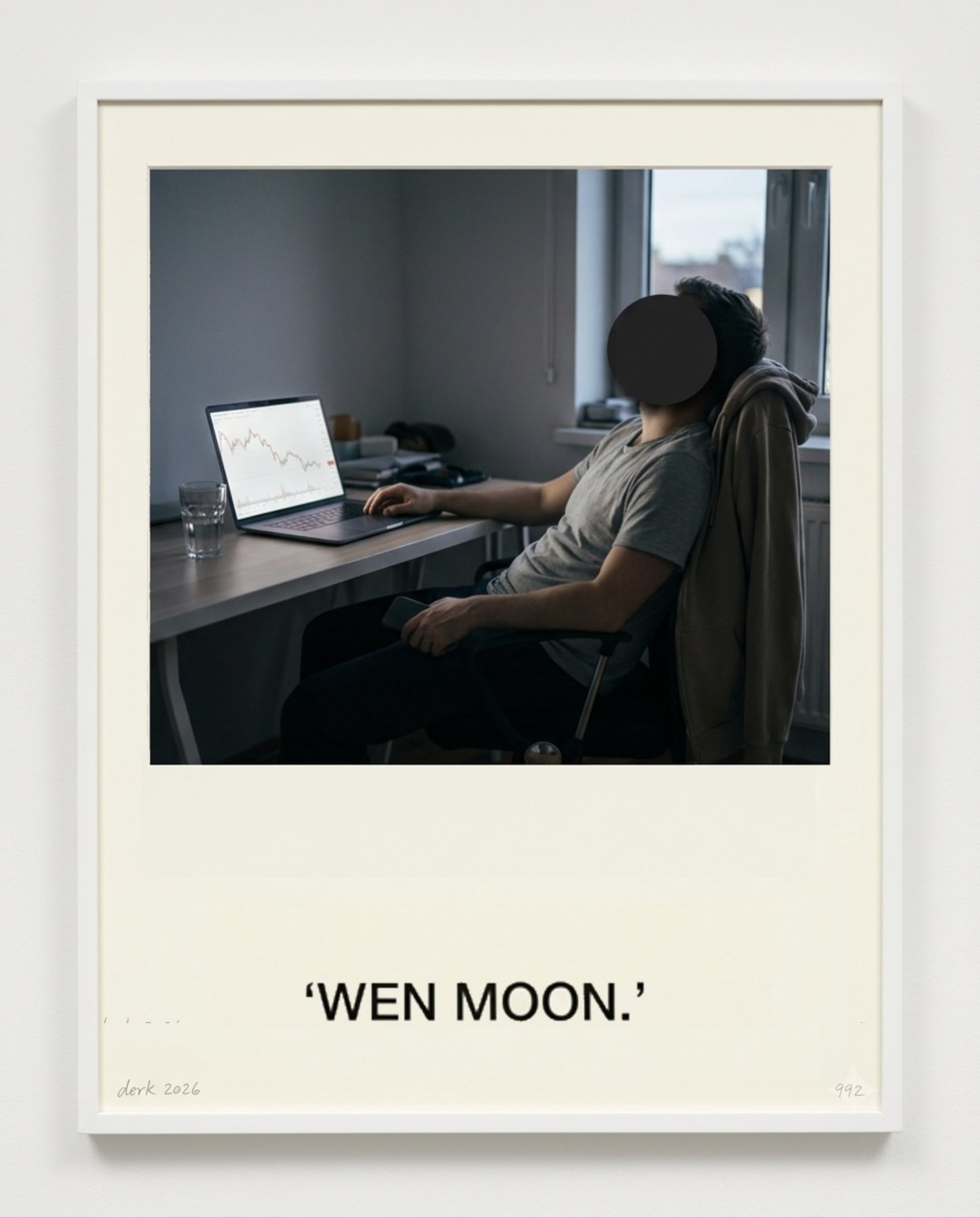
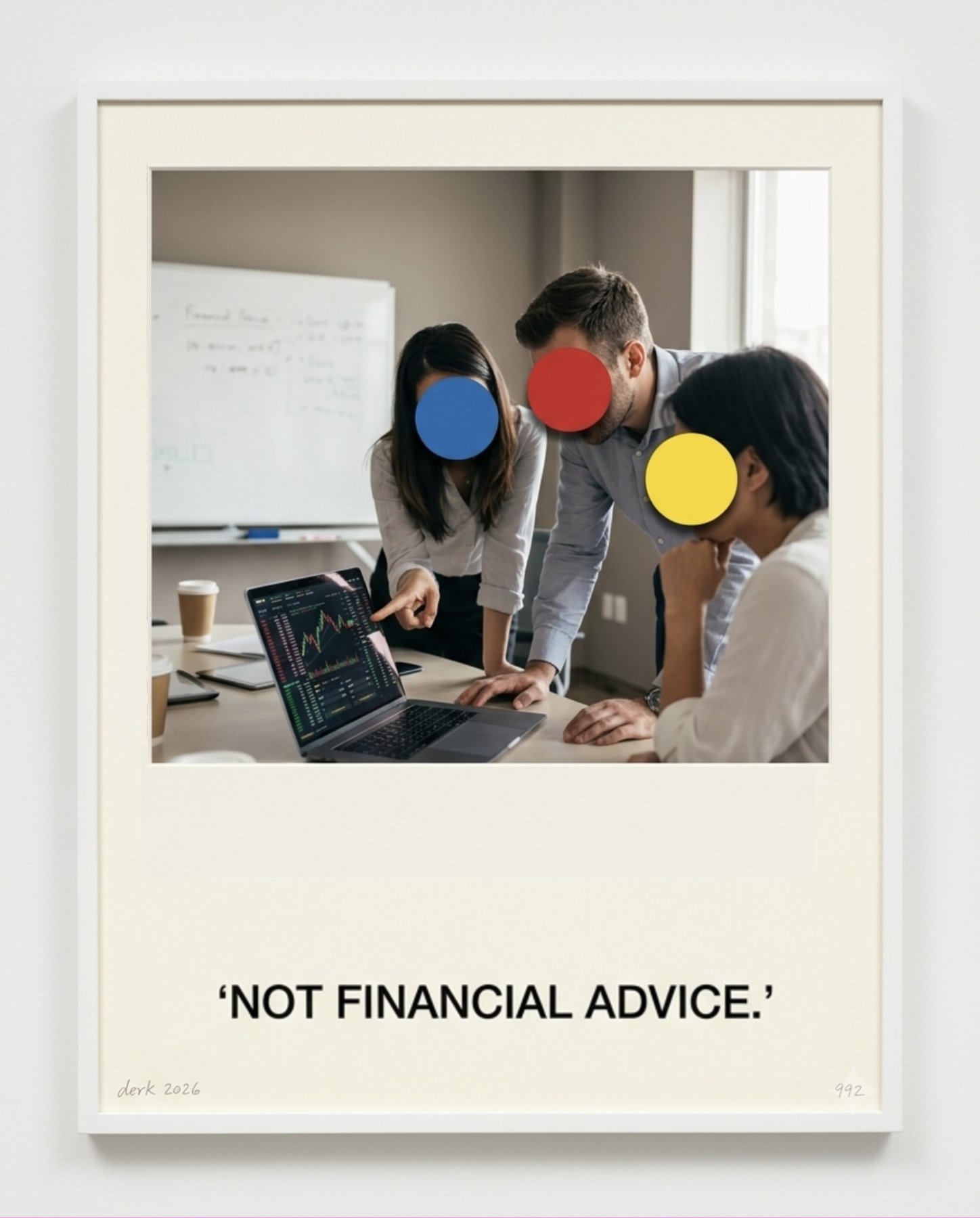
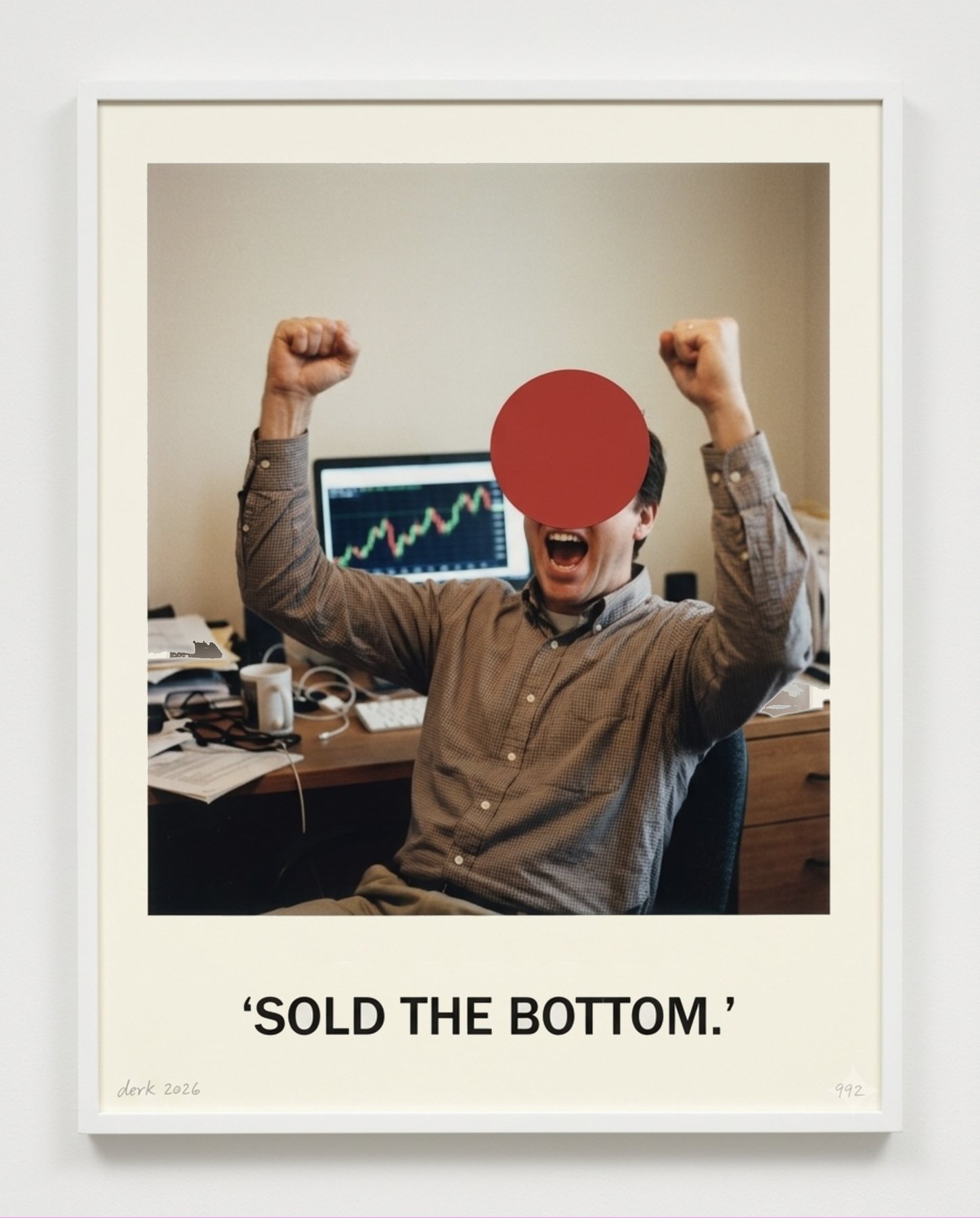
Stock photography of market euphoria and market grief, the faces removed with the same flat disc Baldessari used to erase his sitters. Except here the disc isn't hiding embarrassment. It's protecting a source.
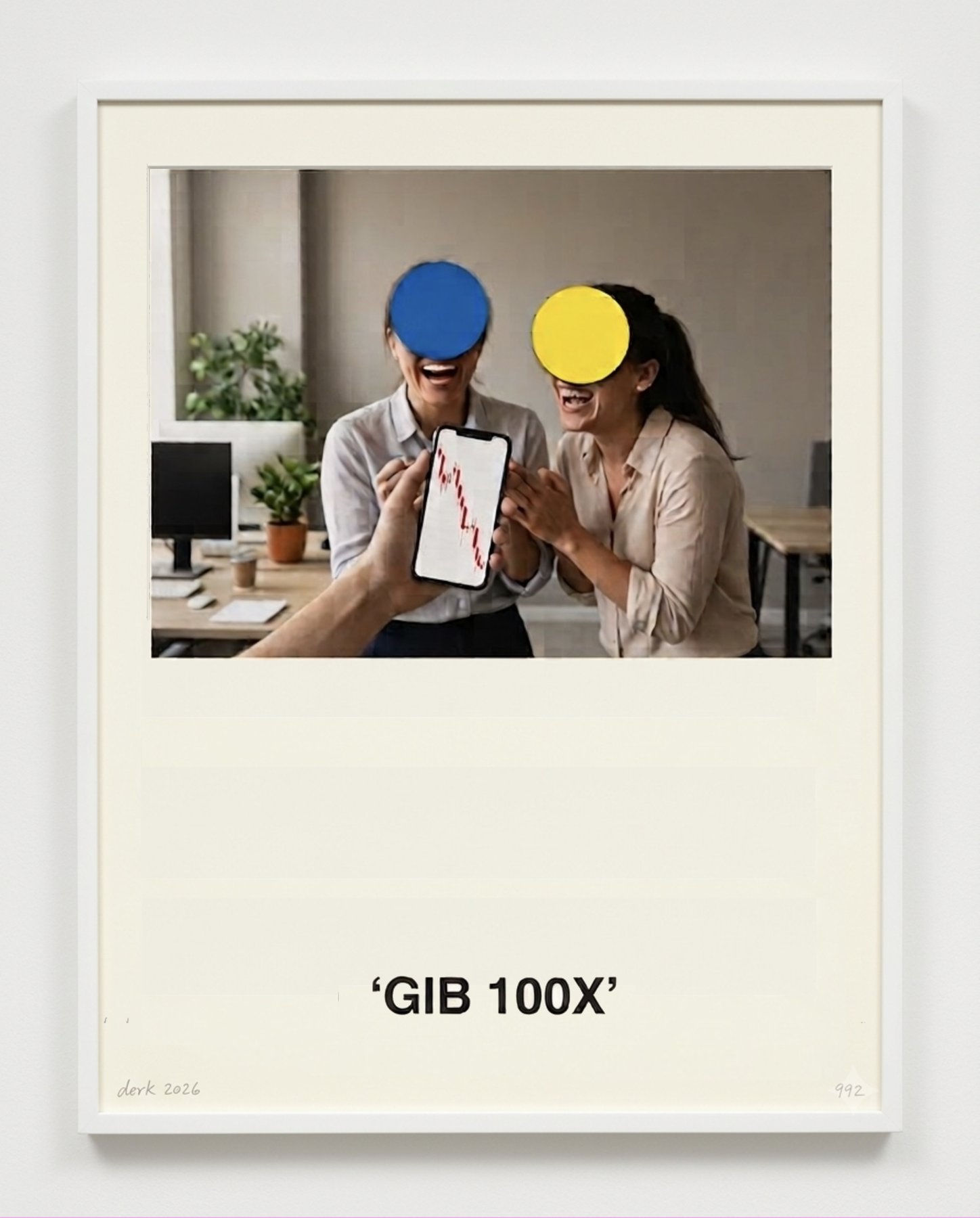
Euphoria requires no identity. The disc protects the source, not the subject.
DORK.2026.001
Waiting staged as a mechanism: the market supplies motion so the sitter doesn't have to.
DORK.2026.002
The disclaimer functions as a third face in the room, doing more work than the two withheld ones.
DORK.2026.003
Triumph photographed at the precise moment it becomes evidence against itself.
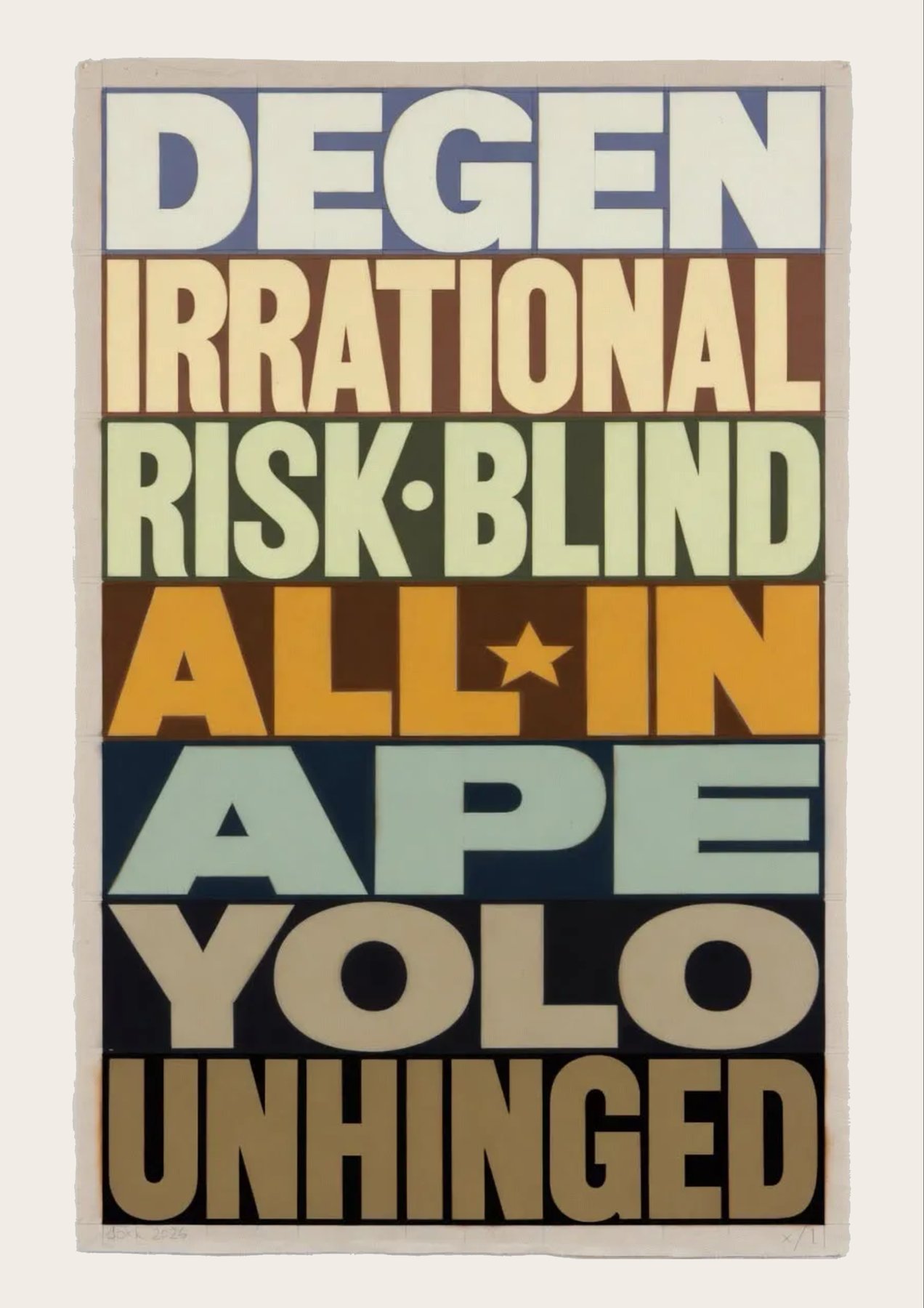
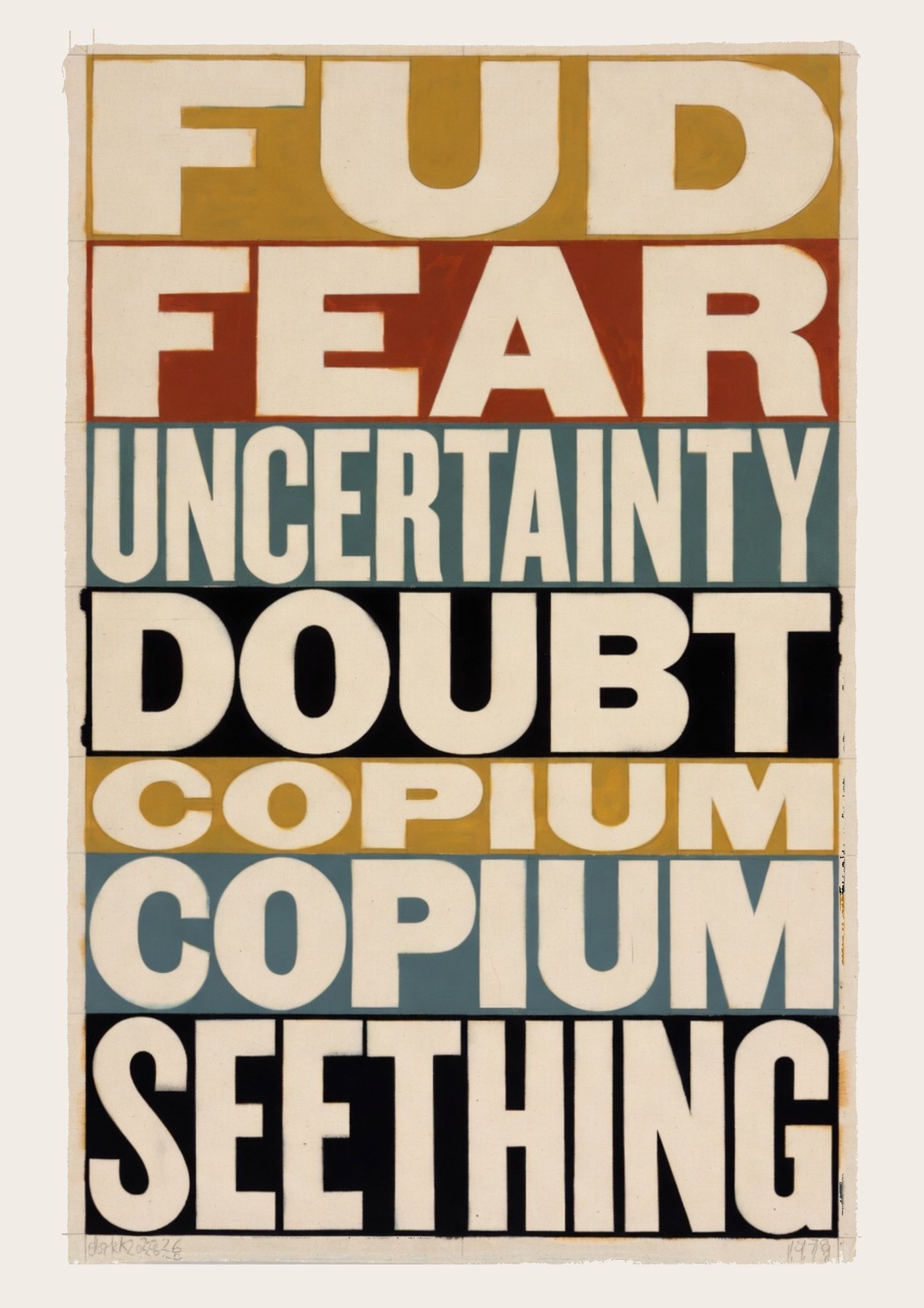
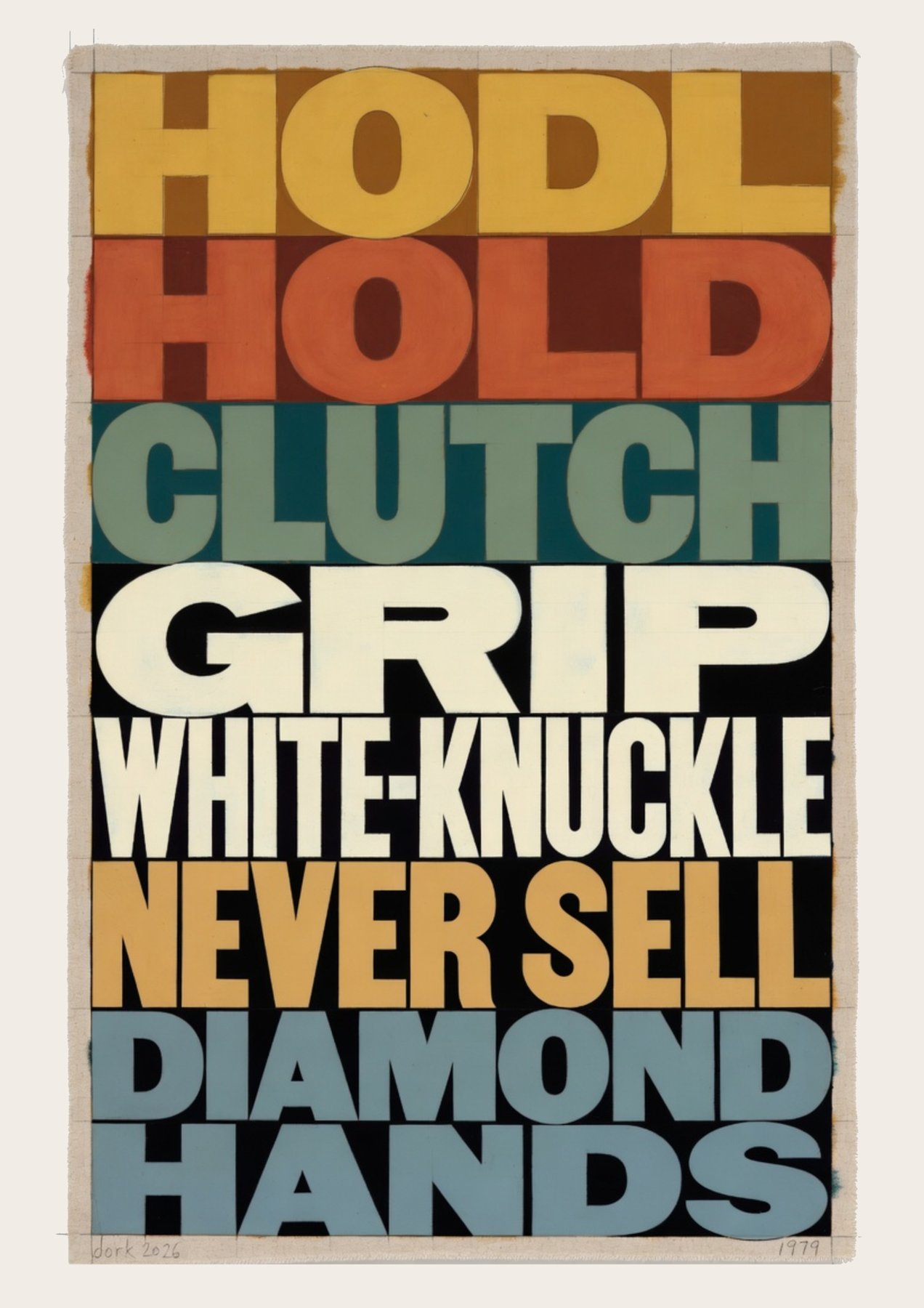
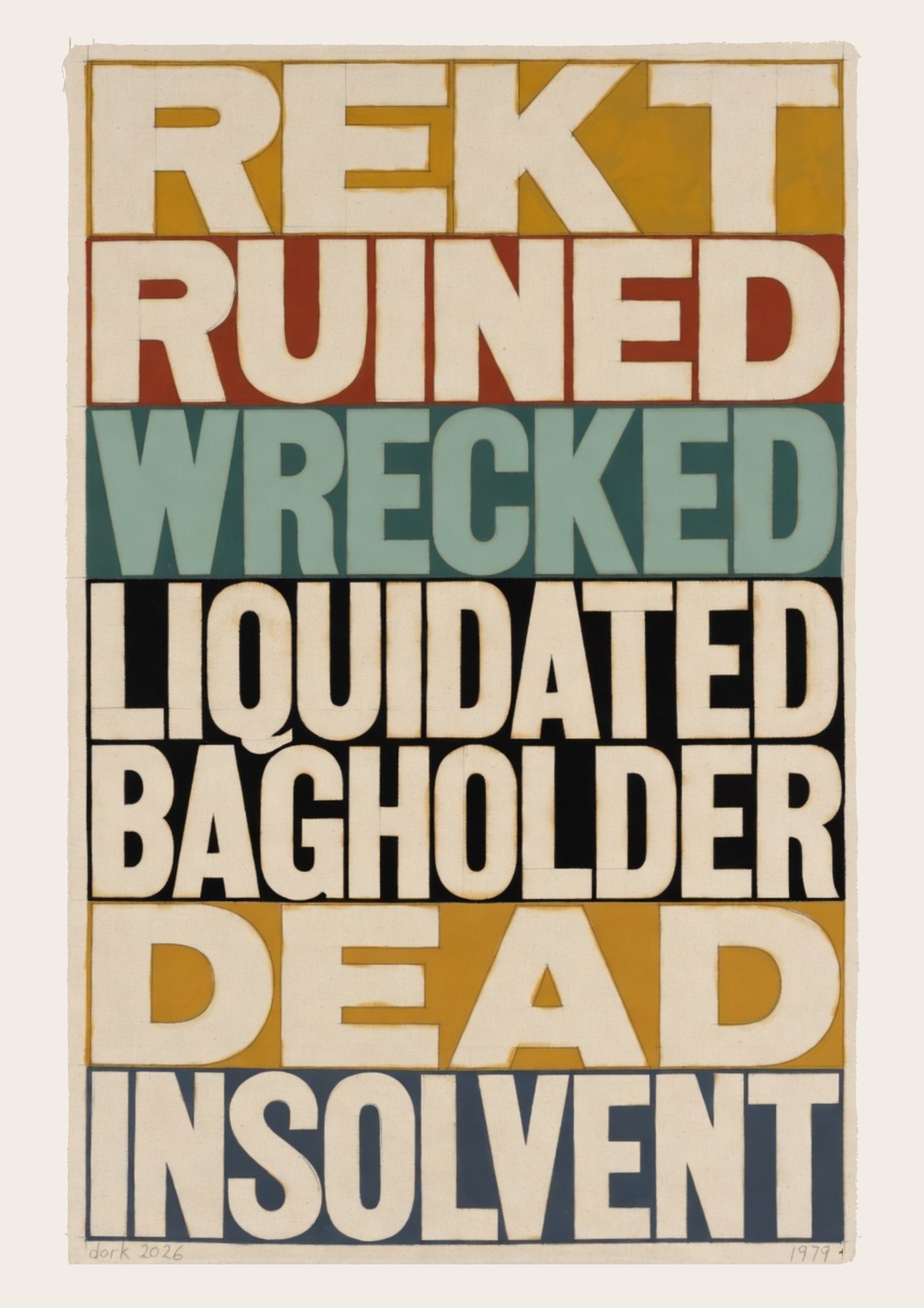
DORK.2026.004Bochner stacked synonyms until a single feeling exhausted the dictionary. These do the same to four moods a portfolio moves through in a single afternoon: the entry, the panic, the holding pattern, the loss.

A synonym cascade with no terminal point, structurally unable to arrive at a conclusion.
DORK.2026.005
Doubt treated as a vocabulary problem and solved by adding more words to it.
DORK.2026.006
Conviction spelled seven ways, none of them meaning anything different from panic.
DORK.2026.007
The complete obituary vocabulary for a single bad decision, stacked and colour-coded.
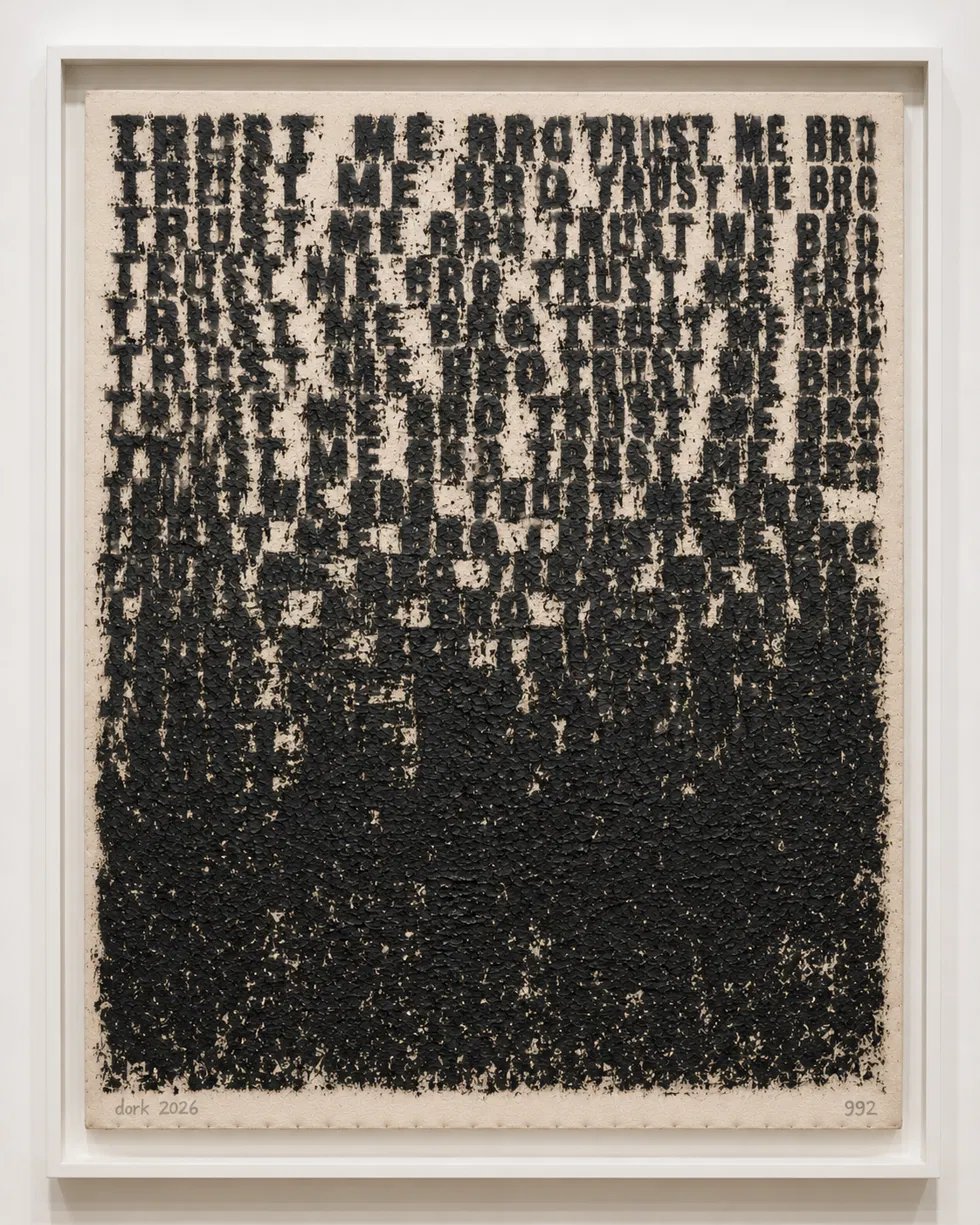
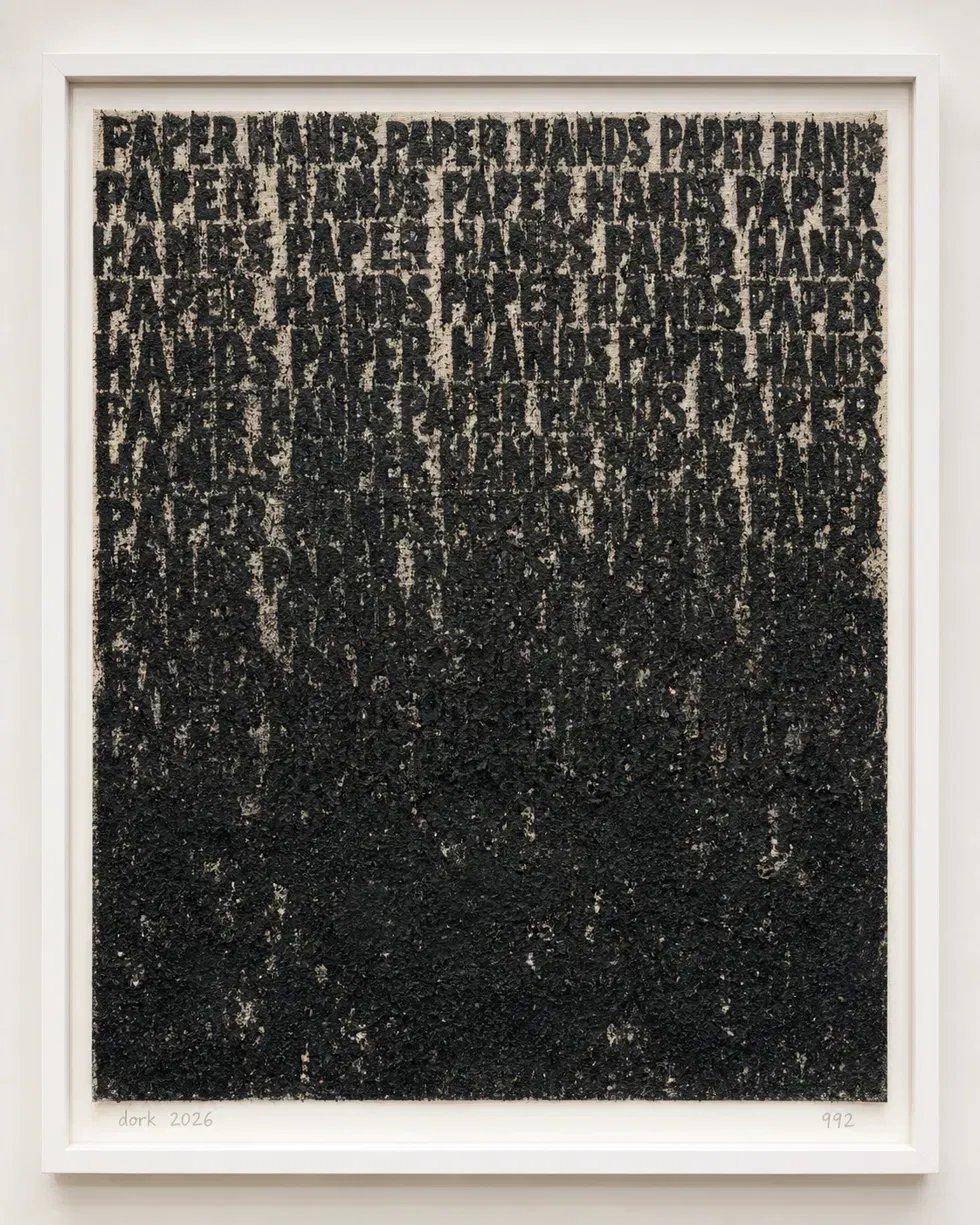
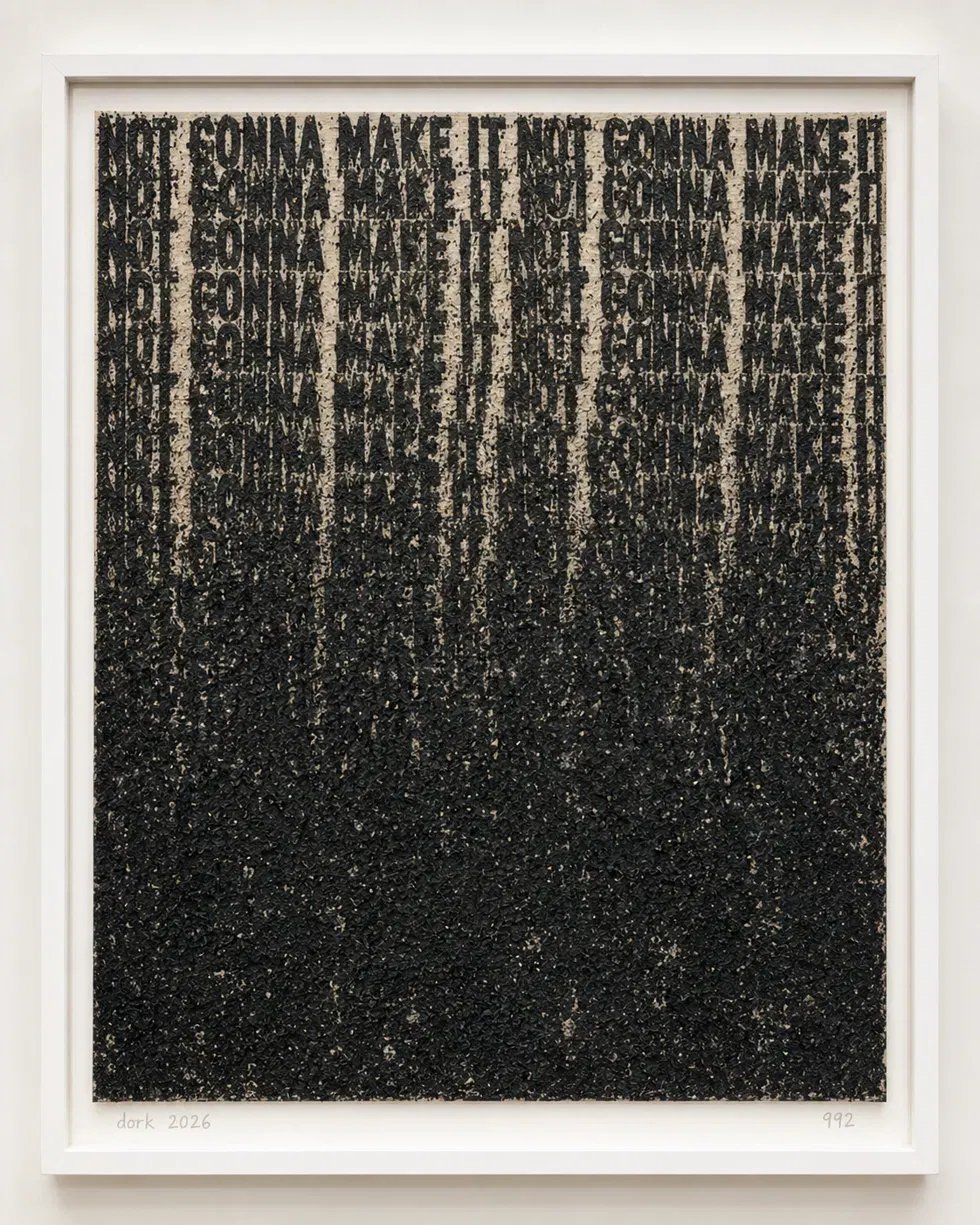
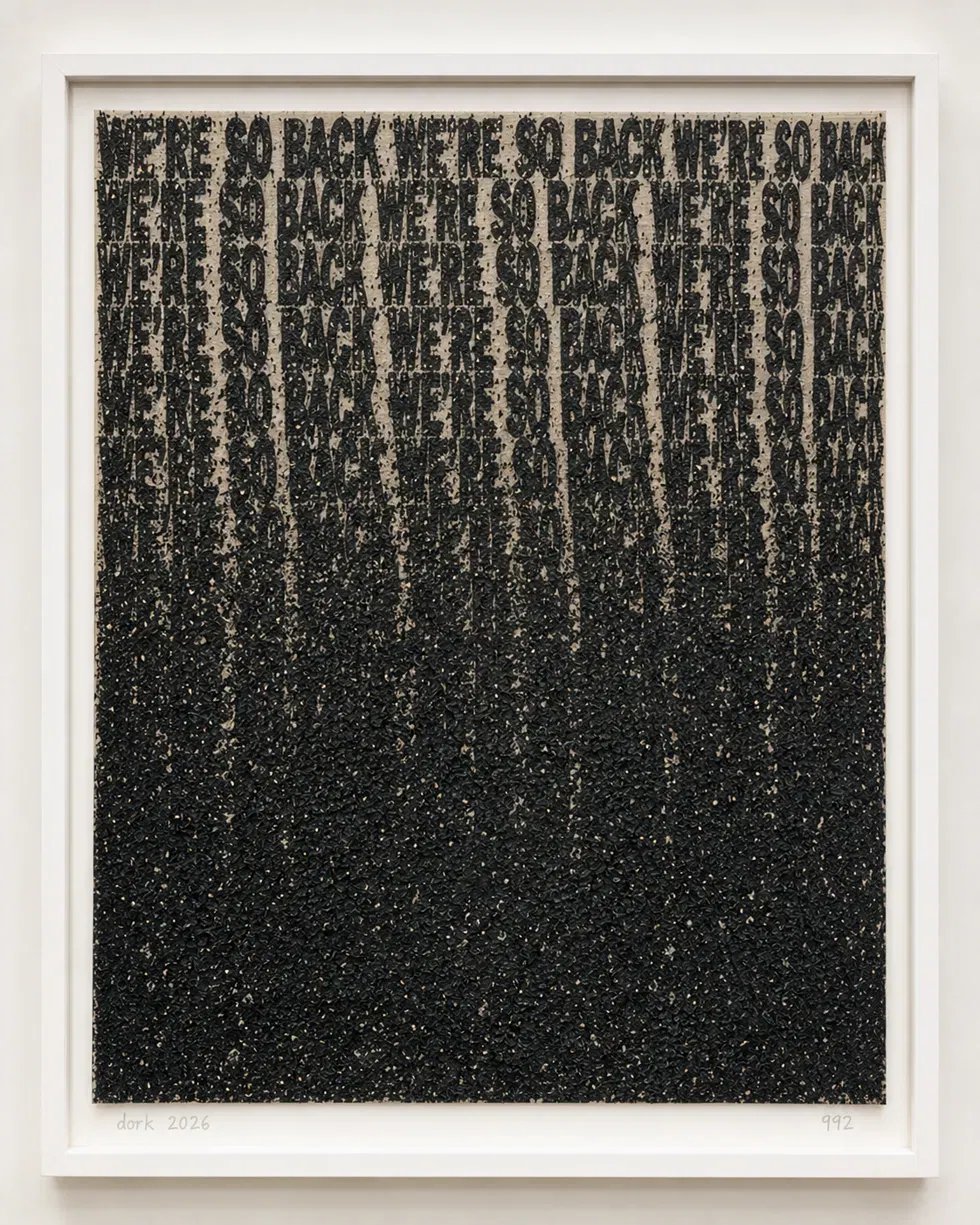
DORK.2026.008Ligon let stenciled text thicken and choke on its own coal dust until language became a surface. These carry a phrase to the same edge: repeated past the point of meaning, into pure texture, which is roughly where the phrases were always headed.

A promise repeated until repetition becomes the only evidence it has.
DORK.2026.009
An accusation that dissolves into the same material it's printed on.
DORK.2026.010
Despair rendered as a typographic pattern, decorative once there's enough of it.
DORK.2026.011
A claim that only means something the second time it turns out to be wrong.
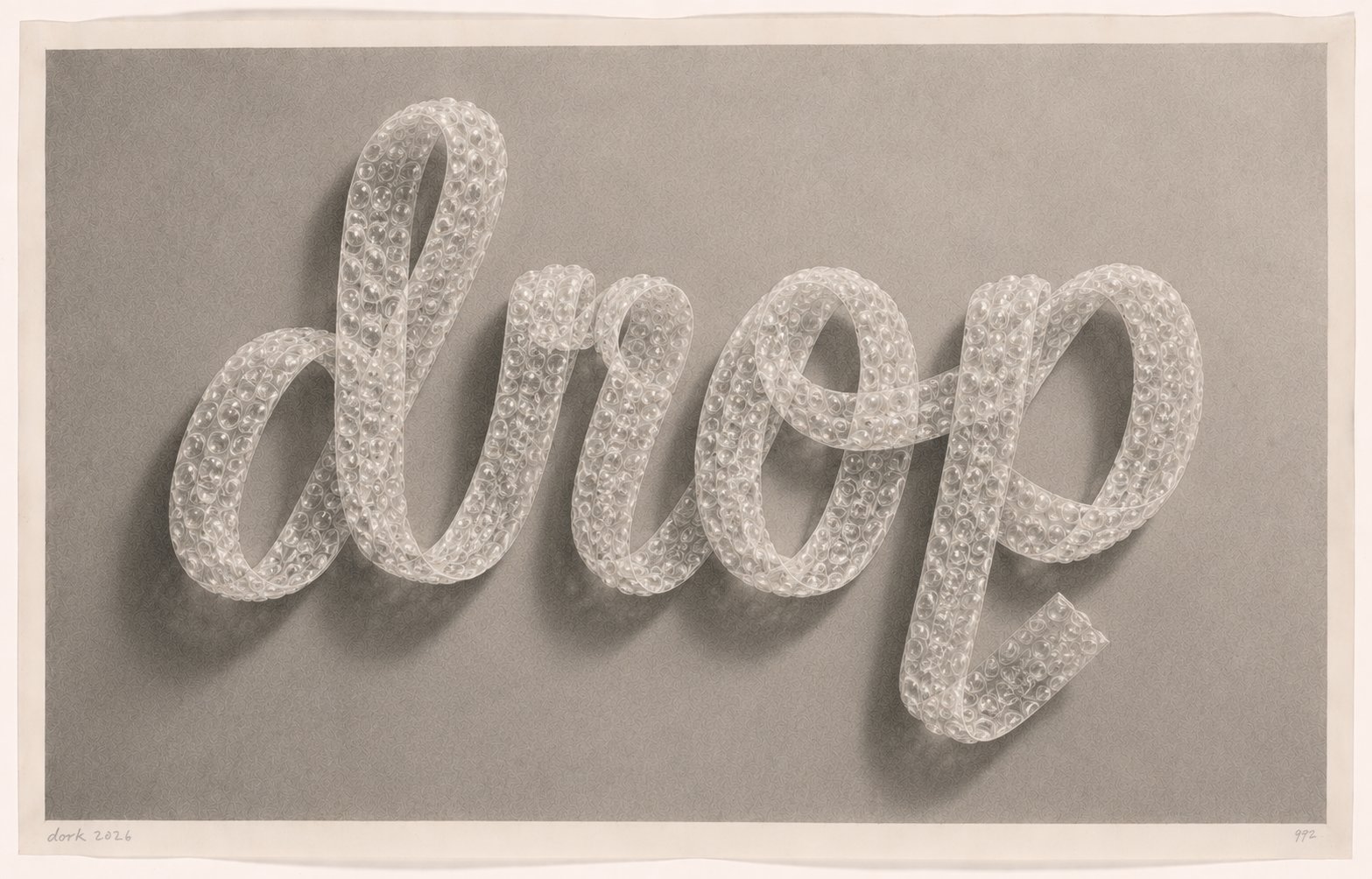
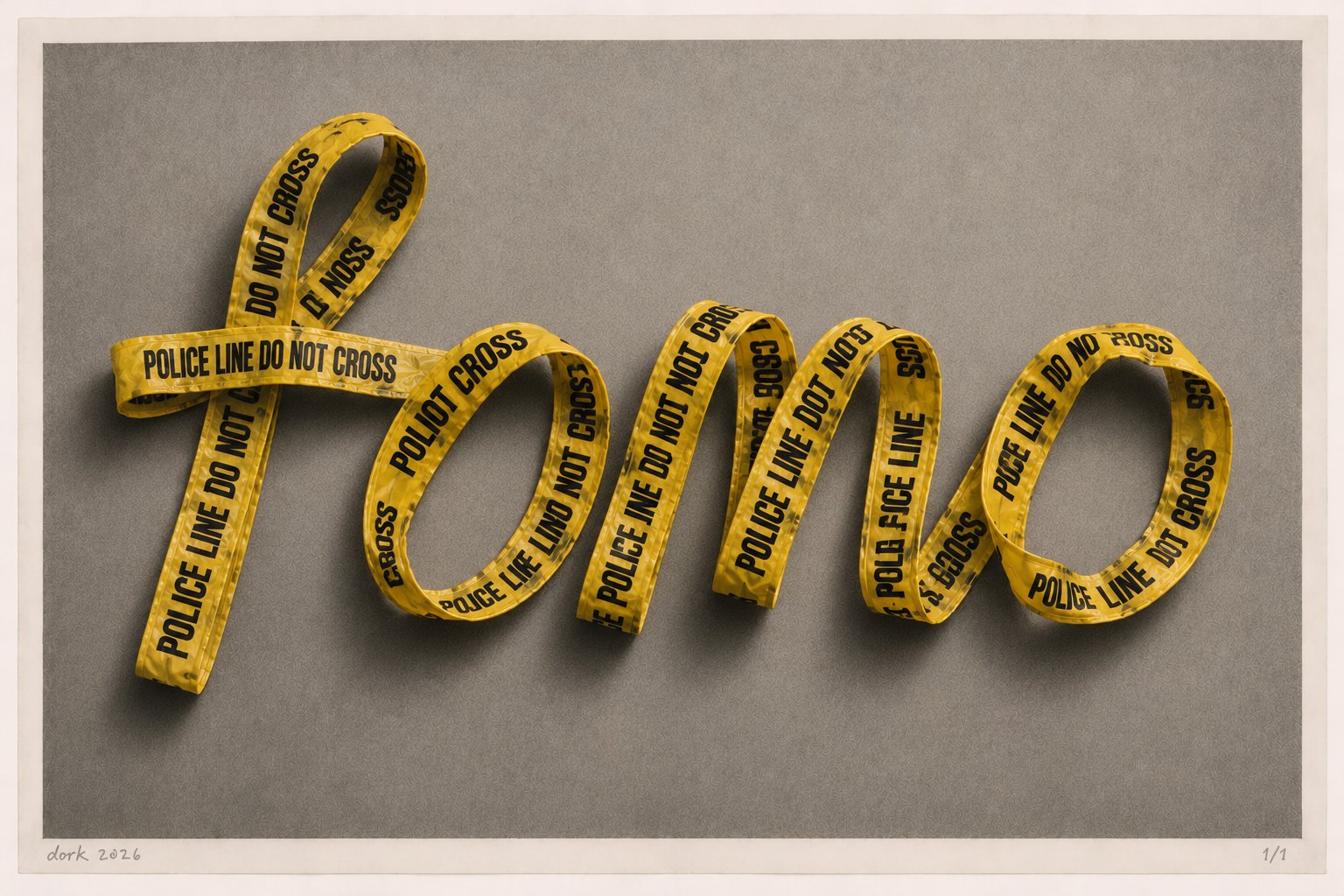
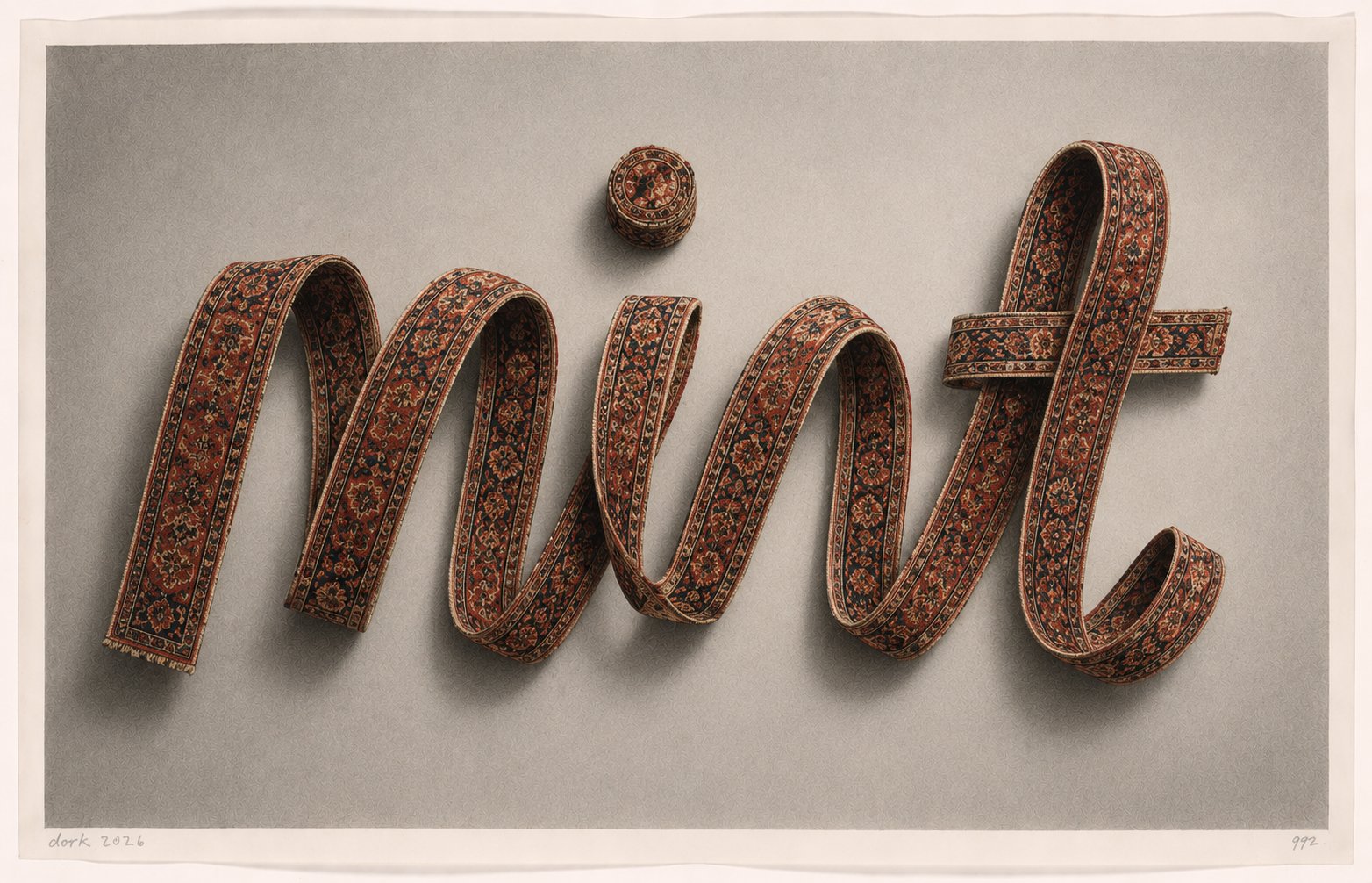
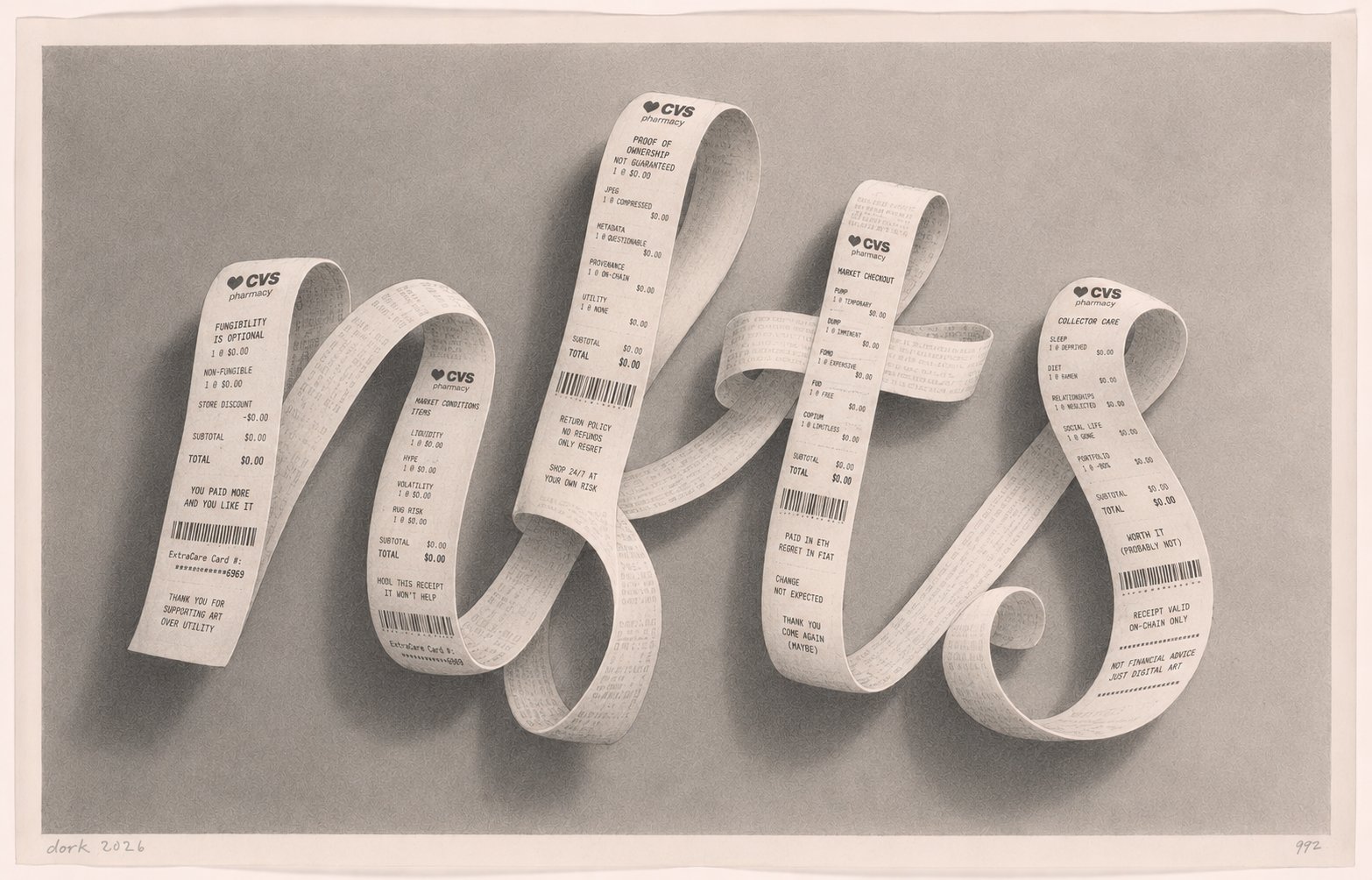
DORK.2026.012Ruscha spelled words out of substances that argued with their meaning. Each work here follows the same rule: the material has to disagree with the word it spells, or the joke doesn't land.

The word built from packaging designed to protect something more fragile than itself.
DORK.2026.013
Urgency spelled in the exact material used to keep people away from something.
DORK.2026.014
A grading term borrowed from a market with a five-hundred-year head start on inventing scarcity.
DORK.2026.015
Ownership itemized like a pharmacy visit: priced, dated, non-refundable.
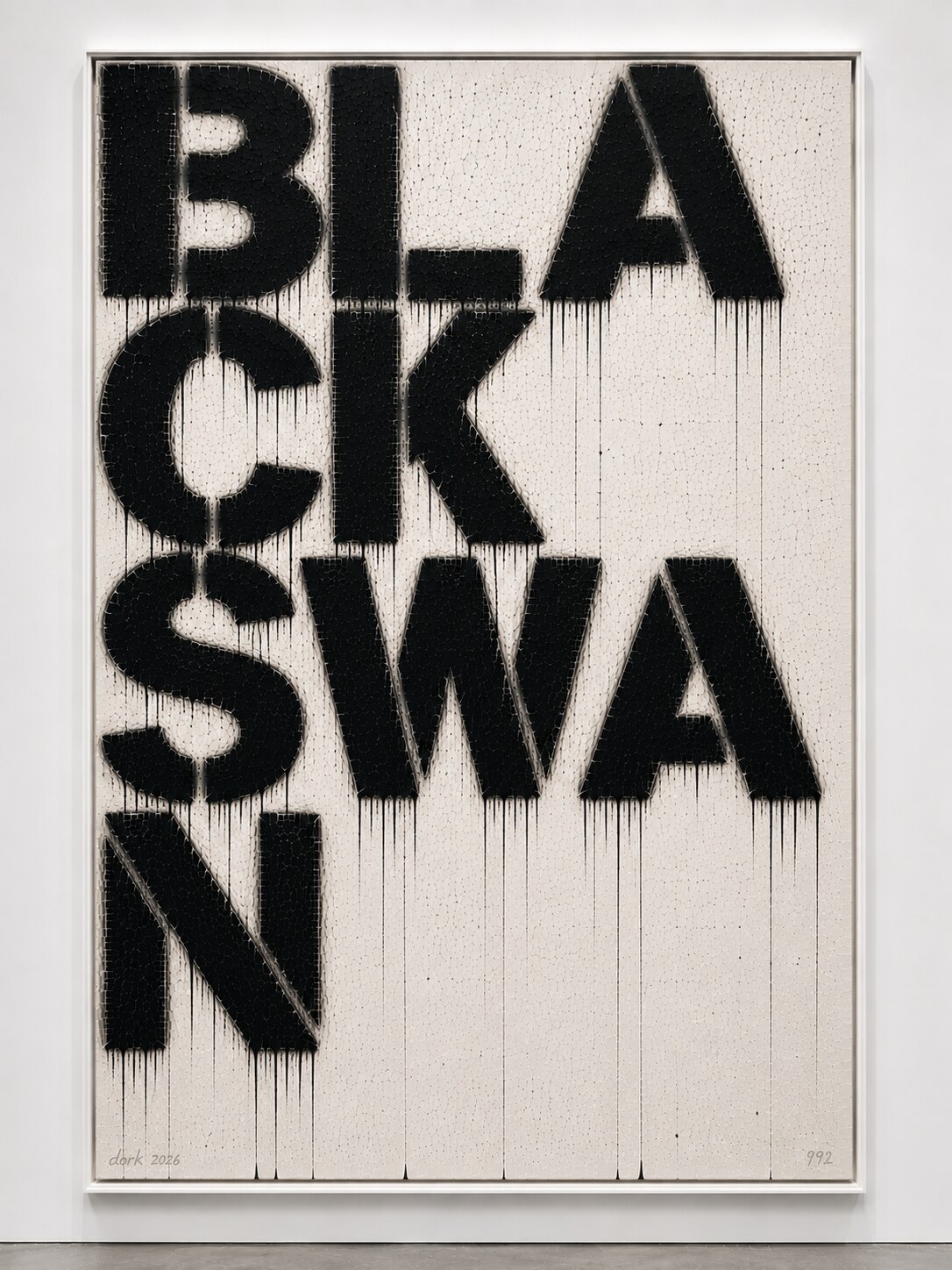
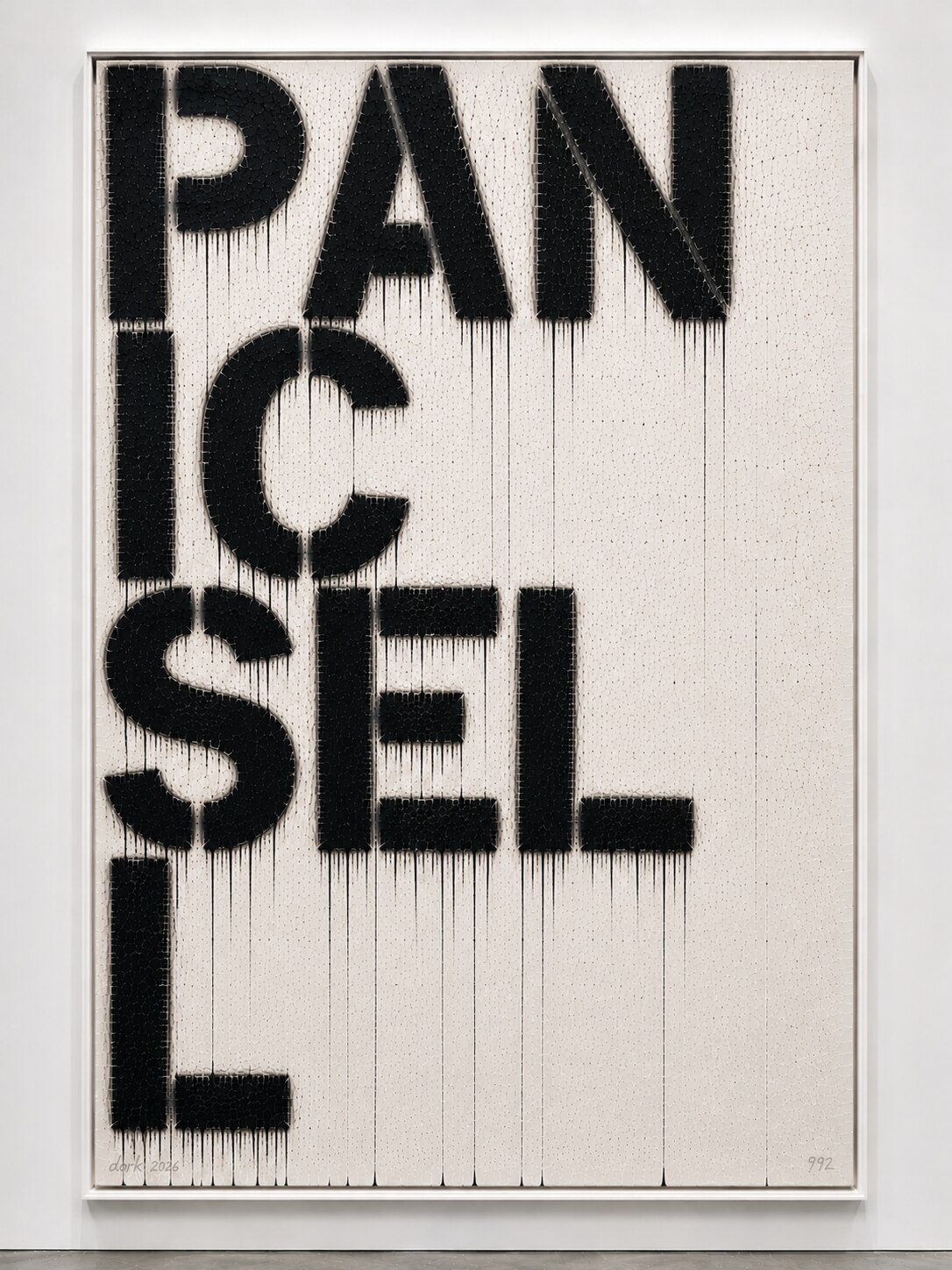
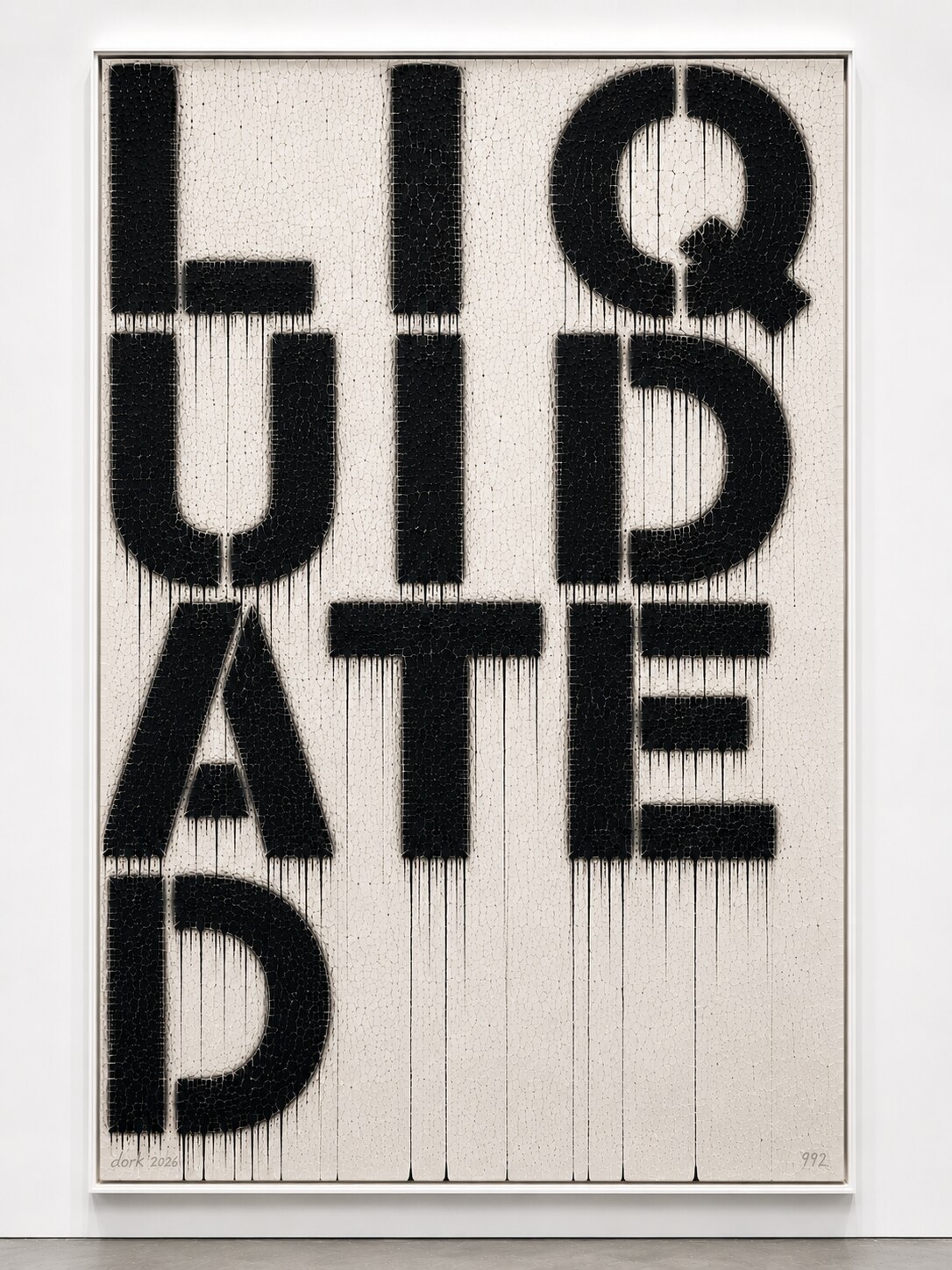
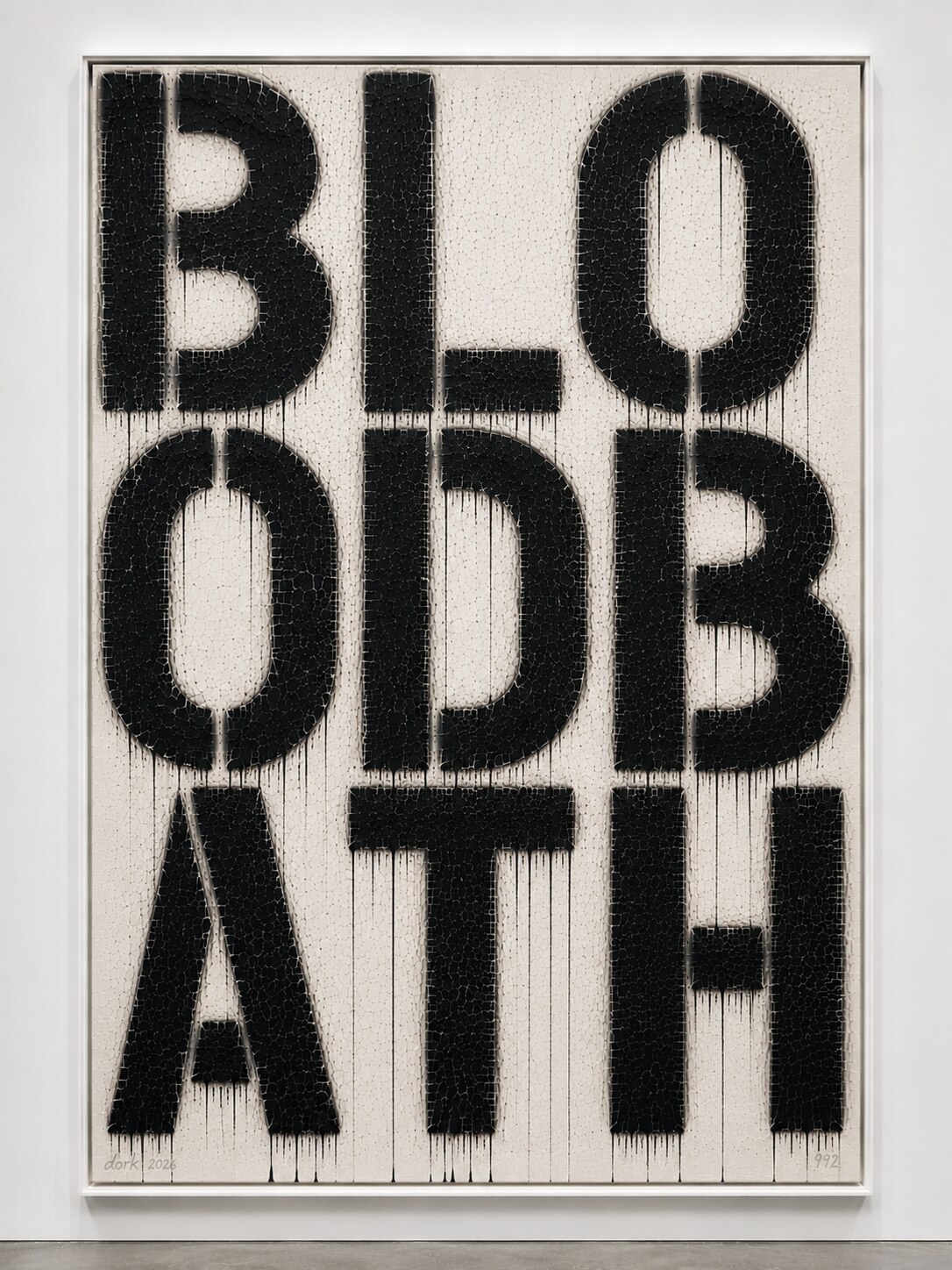
DORK.2026.016Wool stencilled words in enamel until the ground cracked and the letters started to bleed, the failure of the surface doing as much talking as the word itself. These take four terms nobody wants stencilled on a wall and let the drip make the same argument: the message was never going to hold, only the wanting to say it plainly.

A term for the unforeseeable, stencilled in a format designed to be seen coming.
DORK.2026.017
An instruction that only gets issued once it's already too late to follow it.
DORK.2026.018
The word for the exact moment a position stops being a story you get to keep telling.
DORK.2026.019
Financial-press metaphor rendered literally enough that the drips stop being a metaphor too.
DORK.2026.020Each work began as a mechanism rather than an image: a formal device borrowed from an artist who had already solved a specific problem of legitimacy. Baldessari's disc withholds a face. Bochner's stack exhausts a feeling through its own synonyms. Ligon's stencil thickens until it drowns in its own residue. Ruscha spells a word from a material that argues with it. Wool lets the stencil crack and bleed until the surface argues with the message. Weiner insists a work need not be built to remain a work.
The second step was substitution. Whatever vocabulary each device had originally evacuated (embarrassment, boredom, a place name) was replaced with the vocabulary this moment produces instead: a dialect built almost entirely from repetition standing in for evidence. The mechanism performs the same operation it always did. Only the language passing through it has changed.
The third step was material translation. Each mechanism required a plausible physical register: chromogenic print, casein on canvas, oil stick and coal dust, studio photography. That fiction of production is what a catalogue like this depends on. Practically, everything here passed through a generative image model as one instrument in that chain, the way a photograph passes through a darkroom, or a synonym passes through a thesaurus. The instrument is not the subject. The mechanism is.
Selection was iterative, and mostly a process of rejection. Many results satisfied the brief technically while failing it conceptually: a disc that merely decorated rather than withheld, a material pun too literal to argue with its own word. These were discarded regardless of craft. What remains is not everything that was possible, only what held as a mechanism: twenty instances where the substitution worked.